|
|
Music Technology History |
|
|
Home . Portsmouth FC . Celebrity . Music Technology . On This Day . Concerts . Movies . Obituary |
|
|
Music Technology History |
|
|
My obsession with synthesizers began the day I heard and saw Tubeway Army perform Are 'Friends' Electric on TOTP back in 1979.. I got my first one around 1981, a Korg M500SP, inspired by its use by OMD. It was crap and luckily soon superseded by a Yamaha CS-5, a proper synthesizer. Over the years I have acquired many and sold many, some I wish I hadn't (Yamaha CS-15, Moog Prodigy and a Roland TB-303). These pages are dedicated to that obsession. Here are a few of my early forays into synthesizers that I do not own anymore. |
|
|
|
|
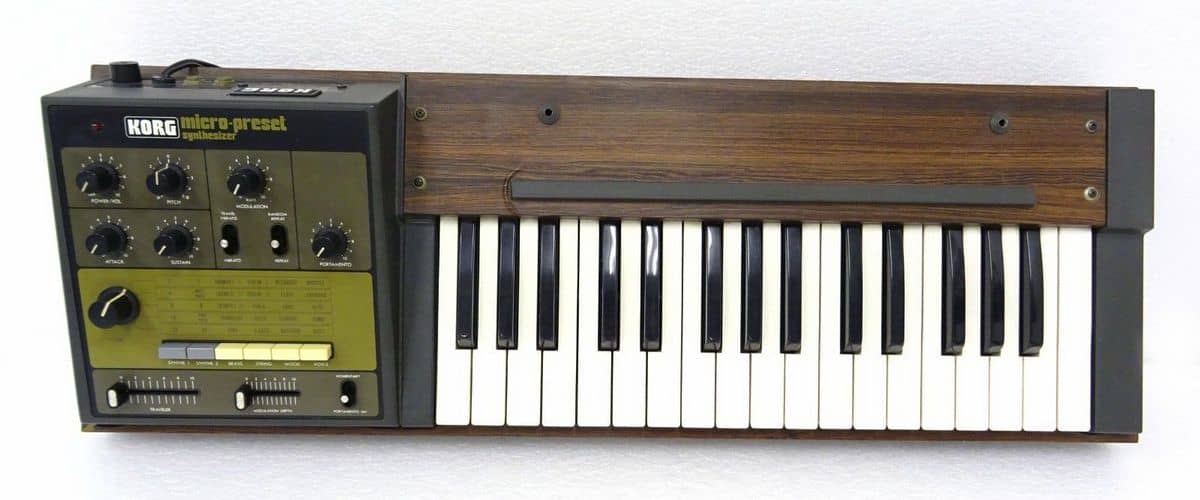
Korg M500-SP |
|
|
Released in 1977, the Korg
M500 Micro-Preset is a beautifully quirky, monophonic analogue synthesizer
housed in a retro wood-grain chassis. Designed for live performance
convenience before digital memory existed, this compact instrument
features a 32-note keyboard and 30 push-button presets grouped into
families like brass, strings, and "synthe." Its simple architecture yields
surprisingly warm, fat tones that punch far above its weight class.
|
|
|
This was the instrument that started my obsession. Purchased partly as it was (almost) affordable on an apprentices salary and also because I had seen OMD use it quite extensively. Unfortunately it is a terrible instrument, very limited but my knowledge of synthesizers was not very extensive in those days |
|||
|
|
|||
|
|
|||
|
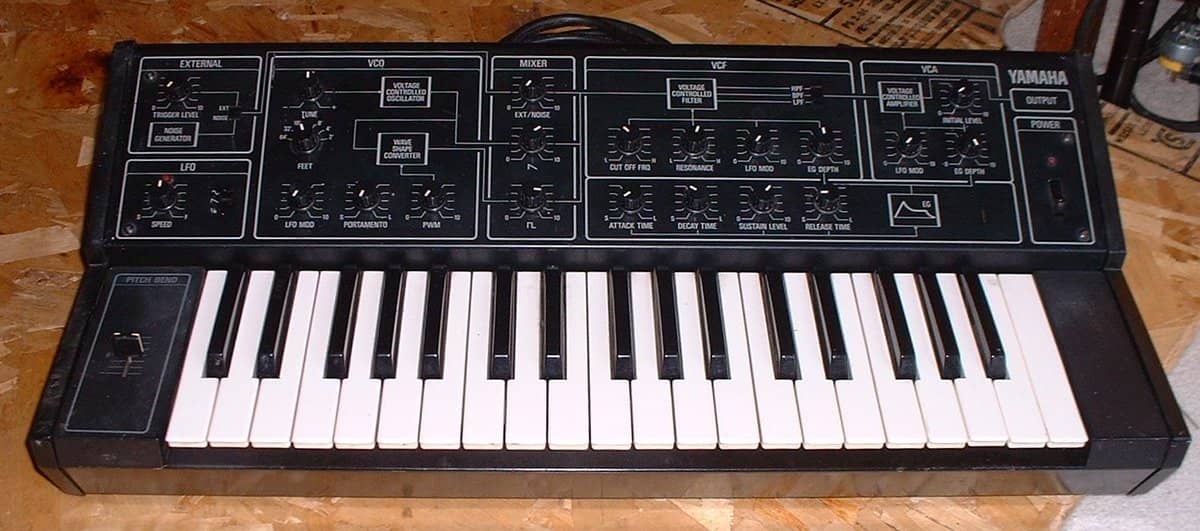
Yamaha CS-5 |
|||
|
Released in 1978, the Yamaha CS-5
remains an underrated gem in the vintage monophonic analogue landscape. Often
overshadowed by its larger siblings, this entry-level monosynth delivers
surprising punch and architectural elegance. |
|
My second purchase, while not exactly the peak of technology, it was at least a proper synthesizer. This was the machine on which I finally learnt the basics of synthesis although it's life was relatively short as I not long after managed to obtain a CS-15 which virtually made this redundant. |
|
|
|
|
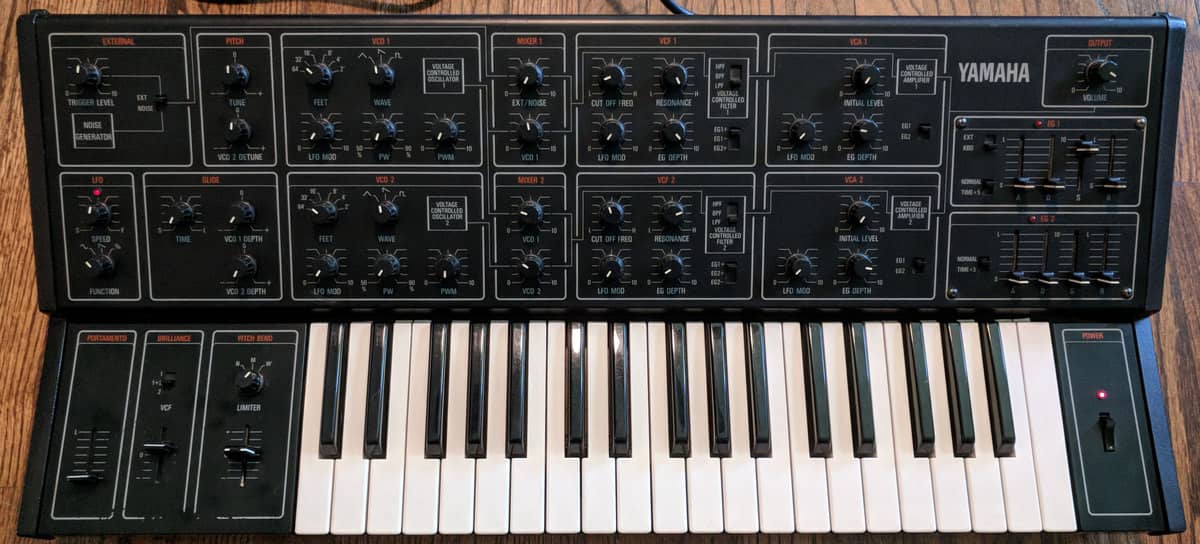
Yamaha CS-15 |
|
|
Released in 1979, the Yamaha CS-15
is a beautifully engineered, often underappreciated vintage analogue
synthesizer. While it doesn't possess the heavy, cream-saturated low end of a
Moog, it carving out a distinct sonic identity with its precise, polite, and
deeply flexible architecture. |
|
Not that long after getting the Yamaha CS-5 I was offered a second-hand CS-15, far too good an opportunity to miss as it was a 2 oscillator synth. It's architecture also allowed routing to one or two separate filters, a feature I probably never really appreciated at the time. Getting this pretty much made the CS-5 redundant. |
|
|
|
|
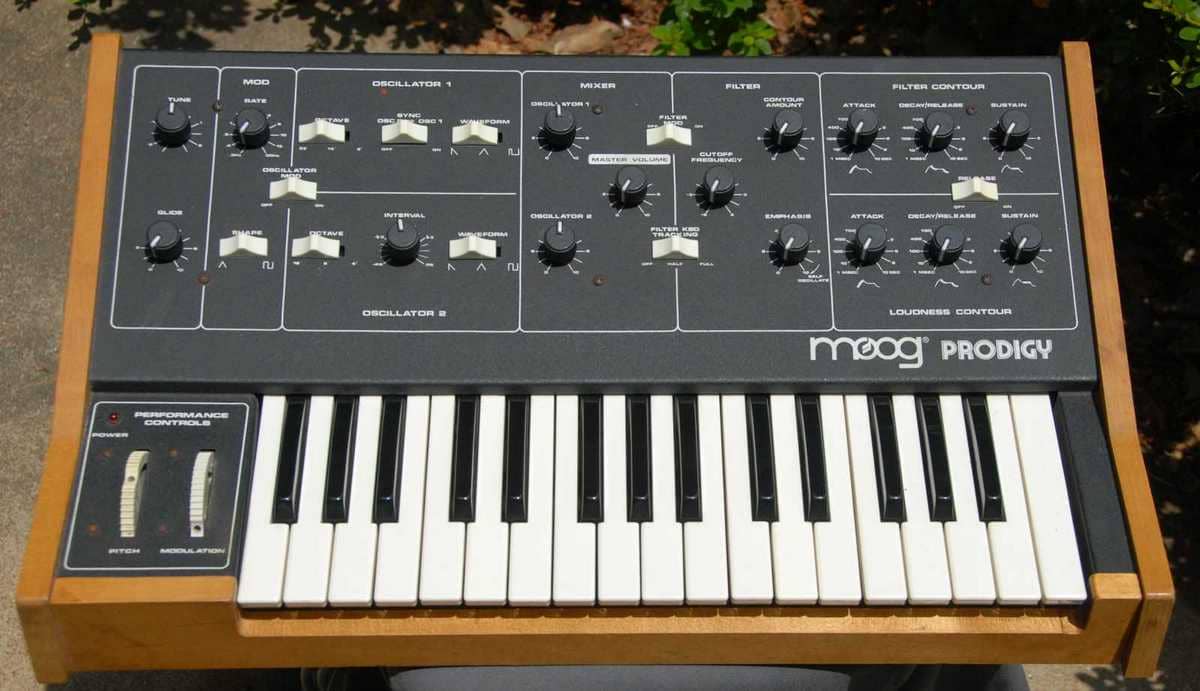
Moog Prodigy |
|
|
Introduced in 1979 as an
affordable, entry-level alternative to the legendary Minimoog, the Moog Prodigy
has earned its own distinct reputation as a powerhouse monophonic analog
synthesizer. Though designed without the direct involvement of Robert Moog, this
compact, 32-key instrument features the unmistakable dual-oscillator
architecture and the classic 24dB per octave transistor ladder filter that
defines the rich, organic Moog legacy. |
|
To date this is the only Moog I have ever owned. A fairly simple but good sounding mono. I remember the sliders had a tendency to pop off. At some point in the past mine had been modified as there was a hole for an extra port at the back, whatever had been added had been removed by the time I bought it. As with the CS-15 I exchanged this for the Korg DW-8000 |
|
|
|
|
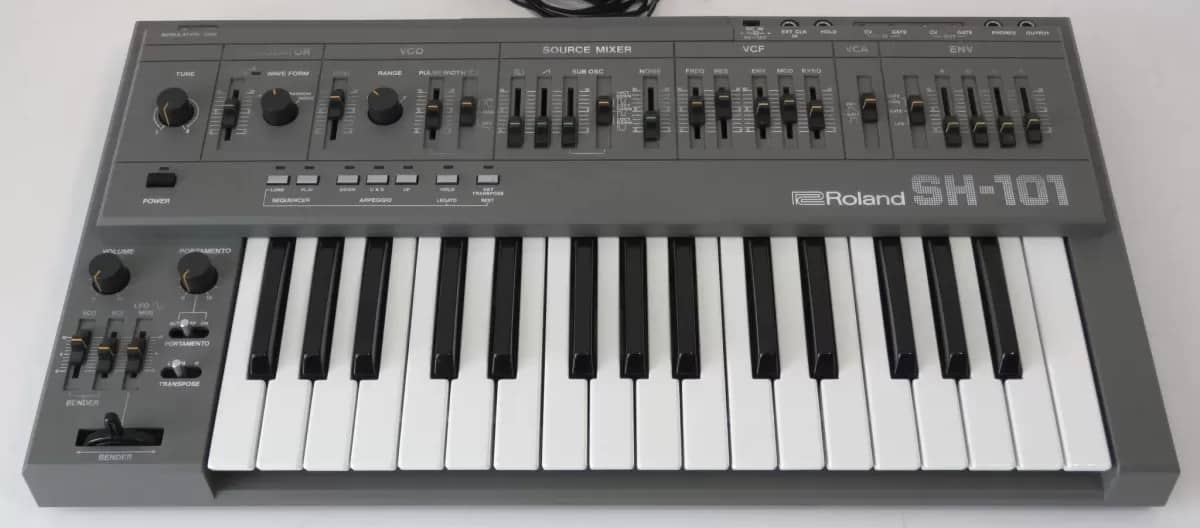
Roland SH-101 |
|
|
Launched in 1982, the Roland
SH-101 is a legendary monophonic analogue synthesizer that became a foundational
instrument for electronic music, especially within acid house, techno, and synth-pop.
Designed for portability and ease of use, its lightweight plastic chassis,
optional battery power, and attachable handgrip for keytar-style performance
made it an instant favourite for live musicians. |
|
Loved the look of the SH-101 when I got one but at the time was never impressed by the sound. It was something that grew on me and I eventually replaced it with the Roland Boutique SH-01A. The original either went to fund a Commodore Amiga or the Sansui WS-X1. |
|
|
|
|
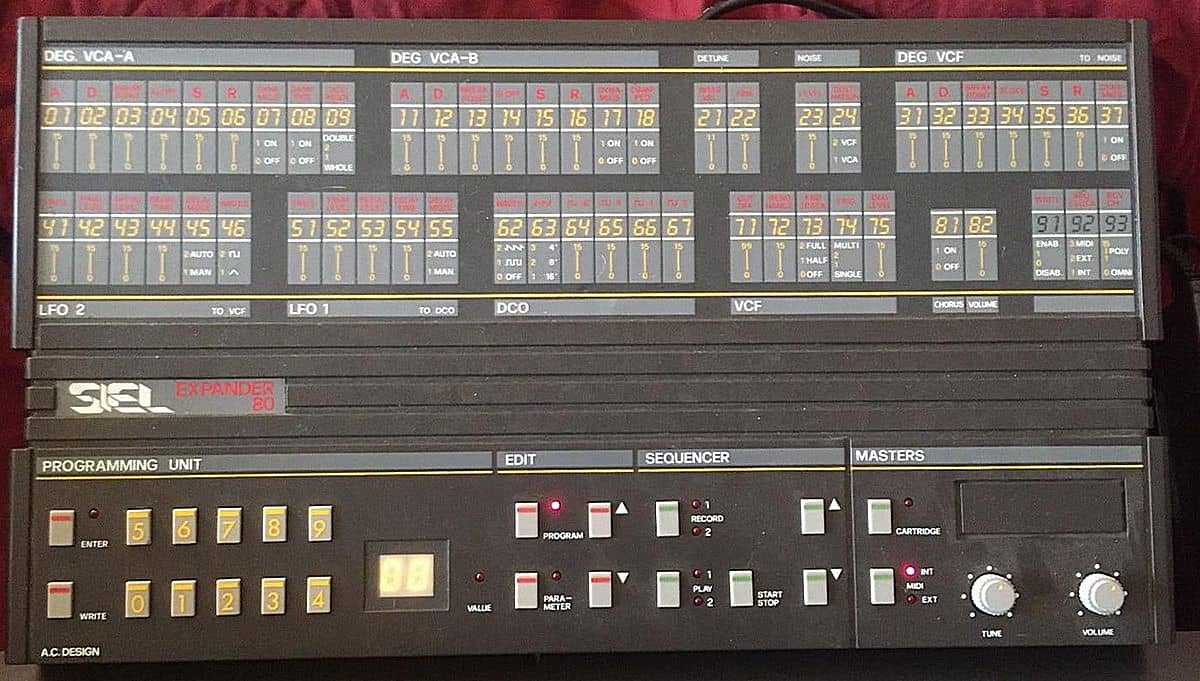
Siel Expander 80 |
|
|
Released in 1985 by the Italian
manufacturer Siel, the Expander 80 is a rare, compact desktop analogue
synthesizer module designed to complement their DK80 keyboard. Built as an
affordable, streamlined alternative to popular modules of the era, it packs a
surprisingly deep synthesis engine into a minimal, push-button desktop chassis
that relies on digital parameter access rather than dedicated sliders. |
|
I remember I picked this up from a second hand shop when I lived in Fratton. It was quite cheap and a fairly bland sounding synth, very much based on the Korg Poly-800. Cannot remember what happened to it. |
|
|
|
|
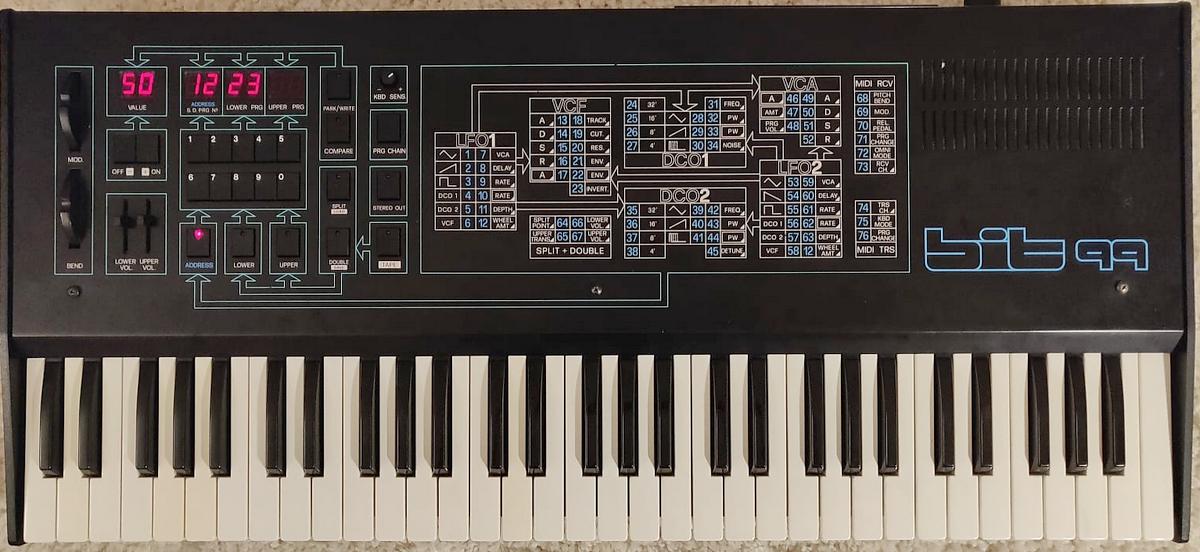
Crumar Bit 99 |
|
|
The Crumar Bit 99, released in
1985, is a hidden gem from the tail end of the Italian analog era. Designed to
compete with the likes of the Roland Juno series, this 6-voice polyphonic
synthesizer pairs digital control with a purely analogue signal path. |
|
Released under the name Bit it was manufactured by the Italian company Crumar. A beast of a machine, it weighed a lot but sounded great. Unfortunately mine developed a fault, the oscillators literally squealed when turned on and needed a long time to warm up and then not well balanced giving different volume levels between notes. Sold it to a guy for spares but after he saw what immaculate condition it was in decided he would take parts from the one he had to get this working. Wish I still had this. |
|
Updated - 24/08/2026 |